 Ángel Giráldez’s second Vallejo figure painting manual, Painting Miniatures from A to Z (Masterclass Volume 2), complementary to the first volume. This volume explains new techniques and tips through hundreds of pictures of the painting process, which will help painters to continually improve their miniature painting skills. The Masterclasses section includes tutorial guides on how to paint all the different Infinity armies, in addition to detailing which colors Ángel used to paint the official Infinity color patterns. If you are a fan of the Infinity universe, or if you are a painter who wants to improve, then this volume will be an invaluable resource. So take your paints and brushes, and enjoy alongside Ángel this new step forward in the hobby world of miniature painting.
- This book shows the painting methods which, over the years, have helped Ángel bring Infinity’s miniature range to life. This manual describes, in meticulously detailed step-by-step tutorials accompanied by hundreds of full-color pictures, how to apply Angel’s techniques to some of the most outstanding miniatures of the Infinity range. If you are a fan of the Infinity universe, or if you are a painter who wants to improve, then this volume will be an invaluable resource. So take your paints and brushes, and enjoy alongside Ángel this new step forward in the hobby world of miniature painting.
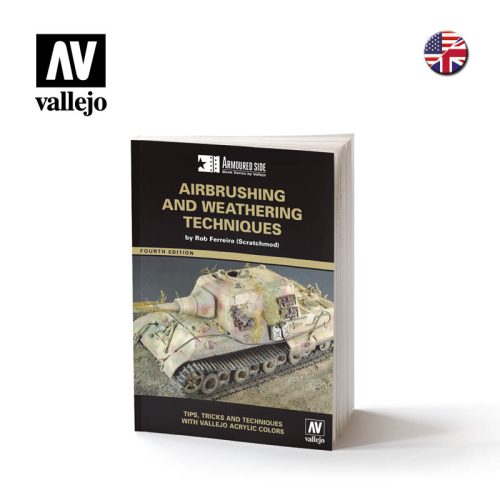
Times have changed in the hobby of model building and painting, most modellers are now starting out using only water-based acrylics. This guide covers the uses of acrylic colors, with the focus mainly on Acrylicos Vallejo, pioneers in this field.
The intention is to share the experience in using acrylics with all model painters, whether they are just starting out or switching over from solvent based paints.
The information in this book is the result of nearly twenty years working with Vallejo acrylic colors and auxiliary products and is meant to be used as a guide and reference.
Number of pages: 204
Format: A4
Language: English
Author: Rob Ferreira (Scratchmod)- Whether because of the spectacular canyons, the scorching deserts, the infamous saloons or the sheriff’s jail, we all remember the iconic images of the American Wild West. The tenth edition of PaintingWAR-Wild West is dedicated precisely to this period, immortalized in the western movies of Hollywood. With more than 30 miniatures painted by José Antonio Bustamante, “Busta”, the magazine covers how to paint the principal characters of the Frontier. With the help of step-by-step guides, the author explains how to obtain the best results in a few simple stages, designed to allow you to obtain the best results in a reasonable timeframe and allowing you to quickly deploy your miniatures for battle. In this issue you will find the most famous western characters: trappers, sheriffs and outlaws, native American such as Apaches or Cherokees, cowboys, animals and even a stagecoach. All these miniatures are painted in stunning detail. Moreover, with the unique painting cards system choosing the right color combinations has never been quicker or more simple.
- A unique book created by some of the best miniature painters in the world. This visual treasure is dedicated to the painting of fantasy figures using Vallejo’s Game Color range. More than just a book, Fantasy Colors is an inexhaustible source of inspiration and knowledge for all fantasy enthusiasts. Through eight step-by-step articles, you will discover the techniques and secrets of the authors who have taken their skills to the limit to create these impressive works, and you will learn how to use the Game Color range to achieve the most amazing effects. Each author focuses on a specific technique, from the use of the airbrush, to the most advanced lighting effects, to the techniques of using Xpress Color, painting metals, and the different skin tones that the versatility of Game Color allows to achieve. Enjoy an impressive collection of painted figures, with detailed descriptions of the colors and techniques used, and get up close and personal with the artists behind the work, their motivations and creative processes. In this book you will find valuable lessons and a source of inspiration that will allow you to take your fantasy figure painting to the next level.
- New book belonging to the Scenic Atmosphere editorial line, in which the renowned artist Marcel Ackle shares the procedures and techniques used for building dioramas. This second volume of the Masterclass series, in which the author shows his personal way of approaching and putting his work into practice, delves into the processes of planning, building and painting different small scenes that, once put together, conform a complete diorama. Marcel Ackle takes us on a creative journey into the fascinating world of diorama building. Through the creation of a scene, which focuses on an old rural building, he shows us his way of working step by step and the different techniques he has perfected over the years. Through 14 chapters, the author reveals his techniques, both in construction and painting, as well as exhaustively detailing the planning and design process of the diorama. The author shows us how to build and paint bricks, plaster, wood, vegetation and accessory elements of different materials, as well as discovering specific techniques to simulate the passage of time and the action of the elements on each of these materials.
- Introducing the first book of the Fifteen Knots editorial line, which includes Vallejo’s publications related to ship modeling. The author Ramir Durá, renowned naval modeler, shares with you the processes and techniques used to recreate the main actors of the famous naval battle of World War II at Scapa Flow. Through the construction of a German submarine in 1/350 scale and a British battleship in 1/700 scale, the author describes the historical events that took place at the British naval base at Scapa Flow in 1939. In this book, you will discover expert assembly and painting techniques, as well as the use of photo etched accessories to add detail to both vessels. In addition, you will learn tips and techniques for building bases that reproduce the surface of the sea, along with the use of specific materials for this purpose.
- If you are an aircraft enthusiast, you cannot miss this new book in the Remove Before Flight series, which collects Vallejo’s publications related to aircraft modeling. Thanks to expert modelers Manel Blasco and Manuel Soriano, you will learn several tips and techniques to recreate wear effects on aircrafts. Through nine chapters, the authors describe the process of assembling and painting aircrafts, as well as techniques to simulate the weathered look characteristic of fighter planes in different eras. The models, in 1/48 and 1/32 scale, are subjected to a wide range of techniques and processes, both with brush and airbrush, to achieve paint schemes worn by use, as well as wear caused by the course of time, environmental conditions and different effects such as rust, fluid spills and exhaust stains. A real treasure in the form of a book for hobby enthusiasts, as they will inspire you and teach you advanced techniques to take your skills to the next level.
- New book belonging to the Scenic Atmosphere editorial line, in which the renowned artist Emmanuel Nouaillier shares the procedures and techniques used for recreating the facades of dilapidated buildings in scale. This first volume of the Masterclass series, in which the author shows his personal way of approaching and putting his work into practice, delves into the processes of extreme wear and tear on buildings and the construction and painting of the different materials. Through eleven articles, we are described how to build and paint wood, concrete, bricks, advertising signs, doors and windows, and countless other details, which will make us wonder if the constructions we are contemplating are scale models, and not images of real buildings. The book includes numerous reference photographs, from which the author draws inspiration to recreate the wear and tear and damage that the passage of time causes in buildings, and how it affects each of the materials used in them.
- This third volume addresses the construction and painting of bases for dioramas, including both natural and urban environments. Through three detailed step-by-step articles, we delve into how to build and paint muddy terrain, riverbanks, and urban environments, as well as the proper techniques for integrating vehicles and figures with the terrain.
- In this Painting WAR issue, the renowned painter Alberto Mateos Jurado, from Avahn Art Studio, shares different techniques focused on the creation of bases for wargames. The issue presents building and painting techniques that can be used on different themed bases, such as sci-fi, fantasy and historical. Each base is sorted by levels of difficulty, which helps the reader to identify its complexity before starting the painting process. Furthermore, some techniques to create bases in a fast and easy way can also be found, allowing the modeler to achieve outstanding results in a short time.
- This excellent book written by Chema Cabrero shows through detailed step-by-step processes a great variety of paint schemes and various weathering effects on modern Russian/Soviet armored vehicles, including the creation of small scenes that put them in context and add extraordinary appeal. Through eight chapters, the entire working process on each model is exposed in a very detailed way, and includes an initial guide in which each following step is defined, based on what the modeler wants to represent and with the techniques to be used in each case. The book shows not only the “how” but also the “why” of using each technique. The figures providing the “human factor” in all the scenes have been made by Daniel Rivas Galindo, and integrate perfectly in the showcased dioramas. Also included is a section of profiles by Pablo Patricio Albornoz, illustrating alternative painting and camouflage schemes. The publication contains a large gallery of photographic references, courtesy of well-known modeler Frances Keegan, and a guide with practical advice on the use of different ranges of Vallejo products.
- The second volume of this series is dedicated to the figures that accompany military vehicles found in vignettes and dioramas. The assembly section shows the tools used in each phase of the building process, while the painting section introduces basic concepts and more advanced techniques, which will help to achieve highly realistic results.
- The third instalment in the Landscapes of War series is focused on making dioramas set in rural landscapes. It shows how to build, paint and weather the principal architectural features that can be found in different European locations.
- The first volume of the Diorama Project series illustrates the main techniques for both the assembly and painting of military vehicles that are to be placed in a diorama, paying special attention to those details that will help to integrate the vehicle into the scene in a realistic way.
- The fourth volume in the Landscapes of War series focuses on the creation of dioramas in industrial environments through a wide set of step-by-step processes. It shows the construction and painting of the main elements that can be found in any industrial environment: concrete, metal doors, silos, corrugated roofs, metal structures, pipes, drums and other accessories.
- Without a doubt, aircraft such as the Corsair, Hellcat and Avenger were icons of the US Navy during World War II. This book from the bench of accomplished modeler Jordi Lario shows how this type of aircraft can be painted exclusively with Vallejo products. From the painting of the cockpit and interior to the final stages of weathering, the techniques and tricks necessary to achieve excellent results are shown through a multitude of step-by-step guides, highlighted sections and visual information. Through the different aircraft featured, the reader can understand how to paint everything from monochrome finishes to interesting tritonal camouflage, thus covering the main schemes used from 1944 to 1945. The book is a complete and interesting guide, not only for lovers of US Navy aircraft from World War II, but also for any modeler who wishes to learn how to paint cockpits, interiors, camouflage and weathering effects exclusively with acrylics to individualize each model.
- In this book Javier Redondo shows, through a series of thorough step-by-step guides, how to paint and weather a simple US Olive Drab camouflage or the more unusual tritonal camouflage patterns used by the US Army. Through a variety of armoured and softskin vehicles, all subject to very different weather conditions, the book shows a great variety of both painting and weathering techniques. To showcase the author’s work, the book outlines different techniques and provides information about the colors and the techniques used in an accessible and visual format. In addition, at the end of each article there is a color chart which helps to clearly identify the colors and products used. At the end of the book there is a section of profiles to provide even more options when painting US Army vehicles and a gallery of other pieces made by the author. The book is a complete and fascinating guide, not only for lovers of the US Army vehicles in World War II, but also for any modeler who wants to learn how to reproduce painting and weathering effects with acrylics.