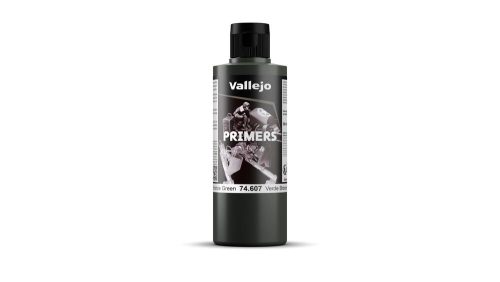
 Surface Primer is available in a range of basic shades most frequently employed to prepare the surface of the model or miniature before starting the painting process. Primers can be applied on all surfaces, resin, PVC, brass, white metal or wood. The primer preserving even the smallest detail of a model, and improves the adherence of the colors applied on this base. It is recommended to apply the Primer in various layers; the product dries rapidly and forms a homogenous film of extraordinary strength and resistance within a few hours after application. Surface Primer can be used directly or diluted with Vallejo Airbrush Thinner of Flow Improver. The recommended compressor settings are around 15-20 PSI or 0.5 to 1 kg. For best maintenance of the airbrush, it is recommended to use the Vallejo Airbrush Cleaner.
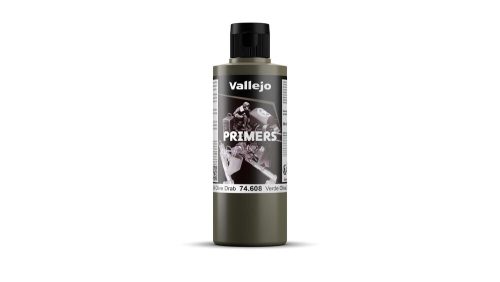 Surface Primer is available in a range of basic shades most frequently employed to prepare the surface of the model or miniature before starting the painting process. Primers can be applied on all surfaces, resin, PVC, brass, white metal or wood. The primer preserving even the smallest detail of a model, and improves the adherence of the colors applied on this base. It is recommended to apply the Primer in various layers; the product dries rapidly and forms a homogenous film of extraordinary strength and resistance within a few hours after application. Surface Primer can be used directly or diluted with Vallejo Airbrush Thinner of Flow Improver. The recommended compressor settings are around 15-20 PSI or 0.5 to 1 kg. For best maintenance of the airbrush, it is recommended to use the Vallejo Airbrush Cleaner.
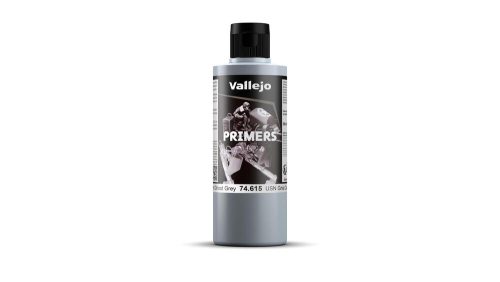 Surface Primer is available in a range of basic shades most frequently employed to prepare the surface of the model or miniature before starting the painting process. Primers can be applied on all surfaces, resin, PVC, brass, white metal or wood. The primer preserving even the smallest detail of a model, and improves the adherence of the colors applied on this base. It is recommended to apply the Primer in various layers; the product dries rapidly and forms a homogenous film of extraordinary strength and resistance within a few hours after application. Surface Primer can be used directly or diluted with Vallejo Airbrush Thinner of Flow Improver. The recommended compressor settings are around 15-20 PSI or 0.5 to 1 kg. For best maintenance of the airbrush, it is recommended to use the Vallejo Airbrush Cleaner.
 “Armour of the Eastern Front 1941-1945” is the first in the new series by Guideline License Publications and the team that brings you Military Modelcraft International in collaboration with Acrylicos Vallejo. The publication examines some of the AFVs that shaped the war on the Eastern Front during World War II – or the “Great Patriotic War” as it is remembered in Russia – which was a titanic conflict and the greatest clash of arms in history. The subjects have been chosen with the modeler in mind and each article provides both reference and inspiration using authoritative text, archival and walkaround photos as well was specially commissioned colour profiles.
- Civilian trucks and other civilian equipment have a much longer lifetime than military equipment, and are therefore much more subject to the influence of the natural effects of dust, dirt, and of course rust. In this book Eugene Tur shows the complete step by step weathering of 7 vehicles.
- New book belonging to the Scenic Atmosphere editorial line, in which the renowned artist Marcel Ackle shares the procedures and techniques used for building dioramas. This second volume of the Masterclass series, in which the author shows his personal way of approaching and putting his work into practice, delves into the processes of planning, building and painting different small scenes that, once put together, conform a complete diorama. Marcel Ackle takes us on a creative journey into the fascinating world of diorama building. Through the creation of a scene, which focuses on an old rural building, he shows us his way of working step by step and the different techniques he has perfected over the years. Through 14 chapters, the author reveals his techniques, both in construction and painting, as well as exhaustively detailing the planning and design process of the diorama. The author shows us how to build and paint bricks, plaster, wood, vegetation and accessory elements of different materials, as well as discovering specific techniques to simulate the passage of time and the action of the elements on each of these materials.
- The first volume of the Diorama Project series illustrates the main techniques for both the assembly and painting of military vehicles that are to be placed in a diorama, paying special attention to those details that will help to integrate the vehicle into the scene in a realistic way.
- The second volume of this series is dedicated to the figures that accompany military vehicles found in vignettes and dioramas. The assembly section shows the tools used in each phase of the building process, while the painting section introduces basic concepts and more advanced techniques, which will help to achieve highly realistic results.
- This third volume addresses the construction and painting of bases for dioramas, including both natural and urban environments. Through three detailed step-by-step articles, we delve into how to build and paint muddy terrain, riverbanks, and urban environments, as well as the proper techniques for integrating vehicles and figures with the terrain.
- New book belonging to the Scenic Atmosphere editorial line, in which the renowned artist Emmanuel Nouaillier shares the procedures and techniques used for recreating the facades of dilapidated buildings in scale. This first volume of the Masterclass series, in which the author shows his personal way of approaching and putting his work into practice, delves into the processes of extreme wear and tear on buildings and the construction and painting of the different materials. Through eleven articles, we are described how to build and paint wood, concrete, bricks, advertising signs, doors and windows, and countless other details, which will make us wonder if the constructions we are contemplating are scale models, and not images of real buildings. The book includes numerous reference photographs, from which the author draws inspiration to recreate the wear and tear and damage that the passage of time causes in buildings, and how it affects each of the materials used in them.
- The publication examines some of the twin-engined medium bombers of World War Two and includes a selection of profiles by Richard Mason, as well as a ground-breaking piece of research on the early B-25 Mitchell by Brian Derbyshire that offers an incisive look into the business of wartime mass-production and the vast number of changes to the ensuing airframes brought about as a result of ongoing combat experience. Other aircraft covered include the rarely discussed Tupolev SB-2, the Mitsubishi G4M Betty, Bristol Blenheim, Savoia-Marchetti SM.79, Petylyakov Pe-2 and the Handley Page Hampden.
- A unique book created by some of the best miniature painters in the world. This visual treasure is dedicated to the painting of fantasy figures using Vallejo’s Game Color range. More than just a book, Fantasy Colors is an inexhaustible source of inspiration and knowledge for all fantasy enthusiasts. Through eight step-by-step articles, you will discover the techniques and secrets of the authors who have taken their skills to the limit to create these impressive works, and you will learn how to use the Game Color range to achieve the most amazing effects. Each author focuses on a specific technique, from the use of the airbrush, to the most advanced lighting effects, to the techniques of using Xpress Color, painting metals, and the different skin tones that the versatility of Game Color allows to achieve. Enjoy an impressive collection of painted figures, with detailed descriptions of the colors and techniques used, and get up close and personal with the artists behind the work, their motivations and creative processes. In this book you will find valuable lessons and a source of inspiration that will allow you to take your fantasy figure painting to the next level.
- This first book of the The Armoured Side collection offers a presentation of the different color schemes used by the IDF from the very beginning up to the present. Renowned modellers will take us though painting and weathering processes on deployed armored vehicle kits such as Sherman, Centurion, the M60 and the Merkavas.
- The first volume in the Landscapes of War series contains many examples, both in terms of modeling and painting, allowing the reader to create a variety of different environments and natural elements, including paths, beaches, rocks, trees, snow and water.
- This second volume is focused on replicating nature in the most realistic way possible. Through desert landscapes, meadows, forests, rivers and all their associated fauna, the book shows in a step-by-step format how to achieve the best results in our dioramas.
- The third instalment in the Landscapes of War series is focused on making dioramas set in rural landscapes. It shows how to build, paint and weather the principal architectural features that can be found in different European locations.
- The fourth volume in the Landscapes of War series focuses on the creation of dioramas in industrial environments through a wide set of step-by-step processes. It shows the construction and painting of the main elements that can be found in any industrial environment: concrete, metal doors, silos, corrugated roofs, metal structures, pipes, drums and other accessories.
- Two top professionals of Sci-fi hobby painting offer their most original views in the first Quasar collection book, which offers creativity without boundaries and content that no lover of Sci Fi can miss: robots, spaceships and post-apocalyptic vehicles!