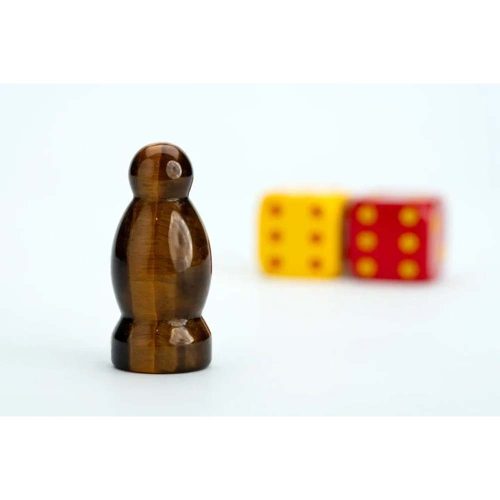
 FanRoll is thrilled to introduce the perfect premium upgrade to your CATAN game. This premium stone robber is accompanied by a pair of solid metal dice forged in the official CATAN dice mold. Collect all 4 robber sets!
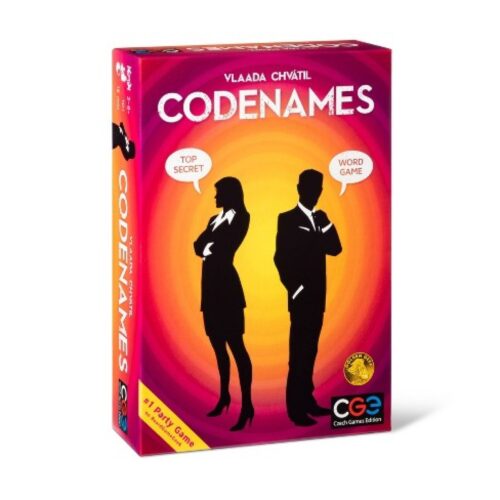 Codenames is an easy party game to solve puzzles. The game is divided into red and blue, each side has a team leader, the team leader's goal is to lead their team to the final victory. At the beginning of the game, there will be 25 cards on the table with different words. Each card has a corresponding position, representing different colors. Only the team leader can see the color of the card. The team leader should prompt according to the words, let his team members find out the cards of their corresponding colors, and find out all the cards of their own colors to win.
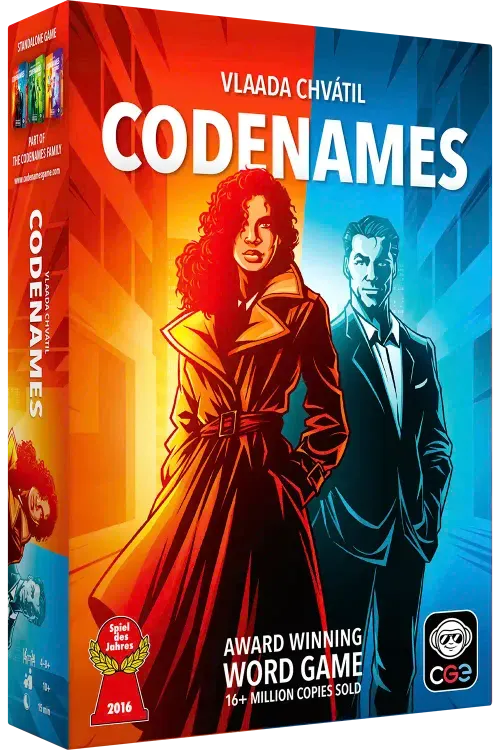 The new edition of Codenames refreshes the classic experience players know and love. From a revised word list for improved gameplay, beautiful art, a brand-new insert that keeps your game neatly organized, to a streamlined rulebook that makes the game easier to teach and learn, this updated version is designed to delight longtime fans of the game and welcome new ones. /n/nIn Codenames, two rival spymasters know the secret identities of 25 agents. Their teammates, however, only know these agents by their codenames — single, seemingly random words like “chocolate,” “sunflower,” or even “carrot.” (Yes, there's an agent out there codenamed "carrot.") The goal is simple: each spymaster wants their team to identify all of their agents first, without accidentally revealing the assassin. /n/nTo play, lay out 25 cards, each featuring a single word. The spymasters share a key card that shows which words correspond to agents from each team, innocent bystanders, and the assassin. They then take turns giving one-word clues followed by a number. The clue should relate to multiple cards that their team should guess, and the number tells teammates how many cards are linked to that clue/n/n.Teammates guess one card at a time. If they guess correctly, they can keep going. But if they pick a card belonging to the opposing team or an innocent bystander, their turn ends. And if they choose the assassin? Game over. /n/nPlay continues with each spymaster offering new clues until one team successfully identifies all of their agents — or someone tragically uncovers the assassin. /n/nGet ready for clever clues, bold guesses, and the ultimate race to uncover your team’s secret agents — Codenames makes every game night unforgettable!
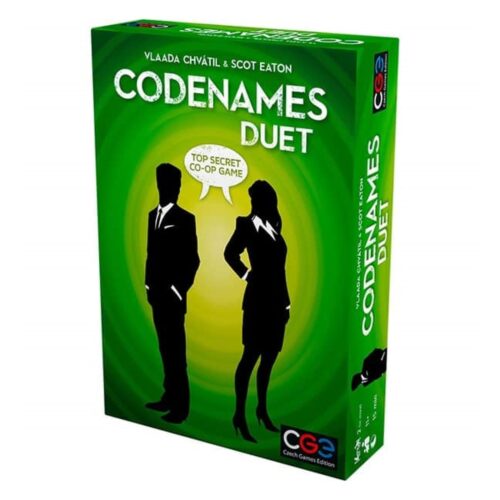 Codenames Duet keeps the basic elements of Codenames Give one-word clues to try to get someone to identify your agents among those on the table! But now you're working together as a team to find all of your agents. (Why you don't already know who your agents are is a question that Congressional investigators will get on your back about later!) To set up play, lay out 25 word cards in a 5x5 grid. Place a key card in the holder so that each player sees one side of the card. Each player sees a 5x5 grid on the card, with nine of the squares colored green (representing your agents) and three squares colored black (representing assassins). Three of the nine squares on each side are also green on the other side, one assassin is black on both sides, one is green on the other side and the other is an innocent bystander on the other side. Collectively, you need to reveal all fifteen agents - without revealing an assassin - before time runs out in order to win the game. Either player can decide to give the first one-word clue to the other player, along with a number. Whoever receives the clue places a finger on a card to identify that agent. If correct, they can attempt to identify another one. If they identify a bystander, then their guessing time ends. If they identify an assassin, you both lose! Unlike regular Codenames, they can keep guessing as long as they keep identifying an agent each time; this is useful for going back to previous clues and finding ones they missed earlier. After the first clue is given, players alternate giving clues.
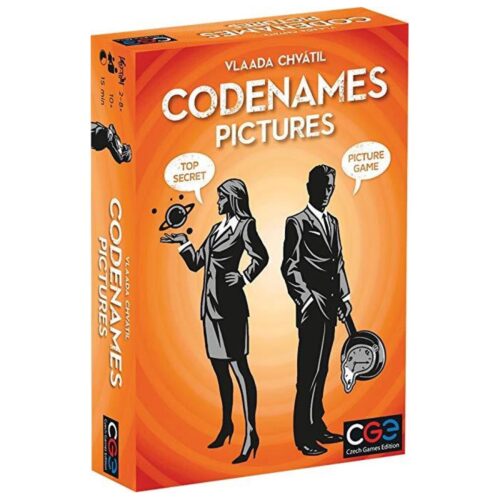 What are these strange symbols on the map? They are code for locations where spies must contact secret agents! Two rival spymasters know the agent in each location. They deliver coded messages telling their field operatives where to go for clandestine meetings. Operatives must be clever. A decoding mistake could lead to an unpleasant encounter with an enemy agent - or worse, with the assassin! Both teams race to contact all their agents, but only one team can win. Codenames: Pictures differs from the original Codenames in that the agents are no longer represented by a single word, but by an image that contains multiple elements.
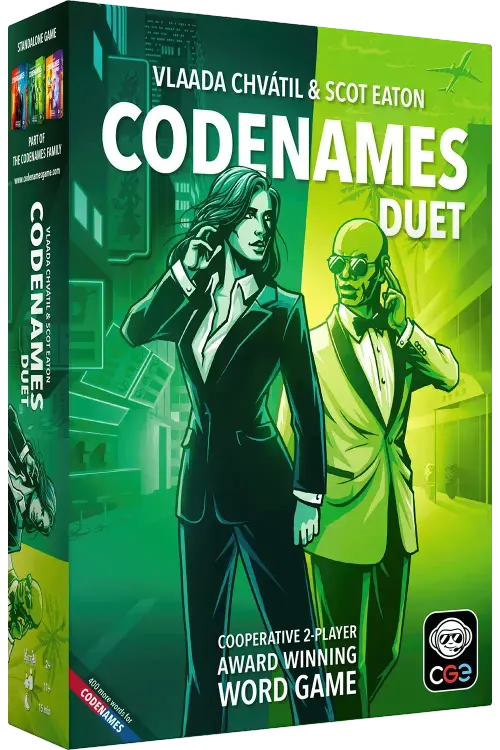 We put a cooperative spin on the classic game! Now with a revised word list, beautiful art, a brand-new insert that keeps your game neatly organized, and a streamlined rulebook that makes it easier to teach and learn the game. /n/nIn Codenames Duet, you're no longer competing — you're teaming up with a fellow operative (or operatives in a group game) for an exciting cooperative experience. The mission? Work together to find all your secret agents hidden among a grid of mysterious codenames. The twist? You each see part of the key — and neither of you has the full picture. Codenames: Duet is perfect to enjoy with only two players, but you can also play it with more friends, if you'd like a less competitive experience than in the basic Codenames. /n/nHere’s how the game works: Lay out 25 word cards in a 5×5 grid. Between you is a shared key card — each half of the team sees one side. On your side, nine words mark your agents, three mark deadly assassins, and the rest are innocent bystanders. /n/nYou’ll take turns giving one-word clues paired with a number, pointing the operative(s) across from you to specific words on the grid. Guess right? Keep going. Guess a bystander? Your turn ends. Guess an assassin? Mission failed — game over. But as long as your guesses are correct, you can keep going, even revisiting past clues. /n/nThe game is played over a series of 9 turns, but can be increased to 11 turns for operatives who may need a little more time as they improve their skills.Your goal: Find all 15 agents — without triggering an assassin — before you run out of time! /n/nThe game includes 400 new words that can be combined with those from standard Codenames.
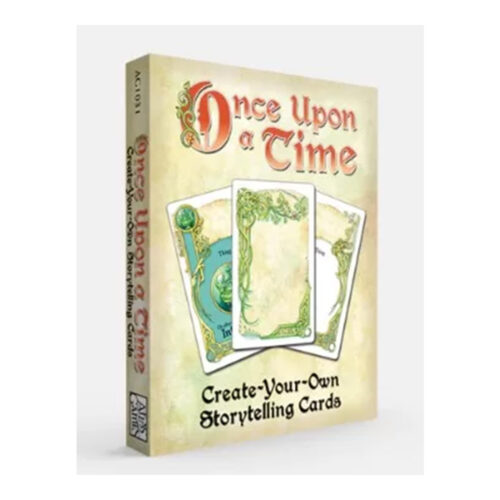 Create-Your-Own Storytelling Cards at a Glance Add unique variety to your Once Upon a Time games. Personalize blank Story and Ending cards. Contains a total of 55 cards and requires Once Upon a Time to play. Tell Your Own Tales: More about Create-Your-Own Storytelling Cards Once Upon a Time is a storytelling game in which players work together to tell fairy tales based on topics in their cards. Add personalized flair to your game with this set of blank cards. Add doodles and story elements to each card and shuffle them into the deck. With these cards, you can integrate in-jokes, favorite characters, and more. Will your princess play soccer, or will your troll settle at the North Pole with Santa Claus? Anything is possible with this expansion!
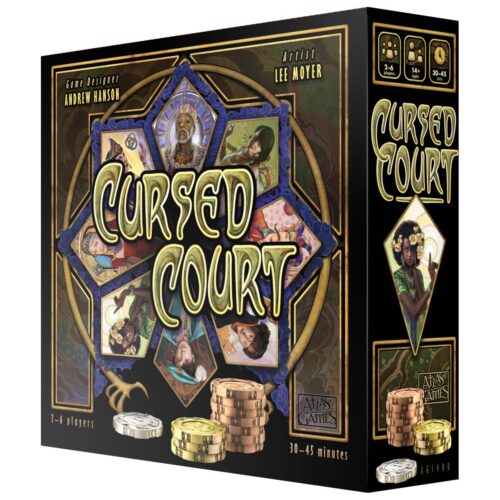 The intrigues and scandals of the realm's greater nobility are a subject of fixation, and even obsession, for the entire kingdom. Most especially for the minor nobility, whose fortunes can be elevated ? or shattered ? by what happens at court. In Cursed Court, you must consider both public and hidden information, some of the latter shared among different pairs of players, when wagering your limited influence in each season of the year. As the machinations of the nine key nobles are progressively revealed, your fortunes rise and fall. After three years, a winner is crowned.
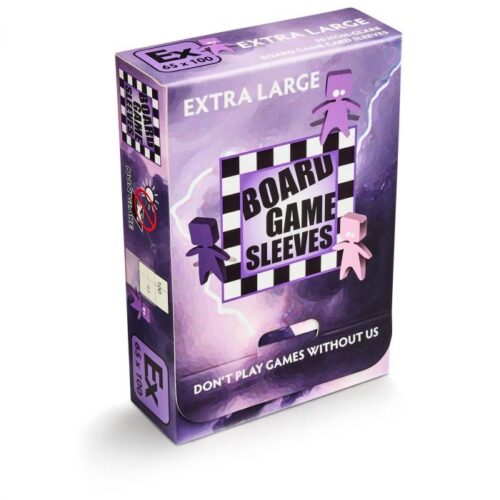 50 non-glare board game card sleeves for cards measuring up to 65 x 100mm. This card size is mainly used in 7 Wonders, but also found in games like The Pursuit of Happiness, Coup and Cargo Noir.
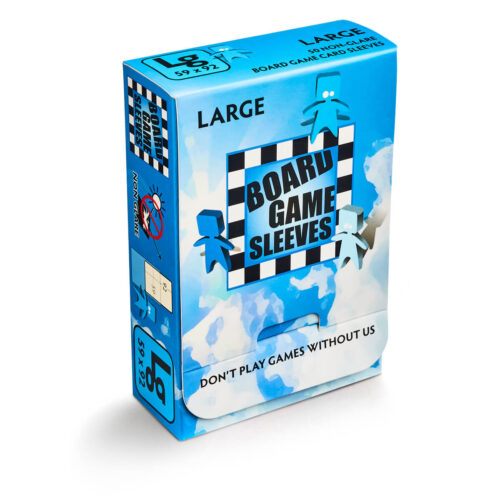 50 non-glare board game card sleeves for cards measuring up to 59 x 92 mm. This size is typical for large cards in most European board games like for example Dominion, Kingdom Builder, Uluru, Agricola and many more.
- Out of Stock
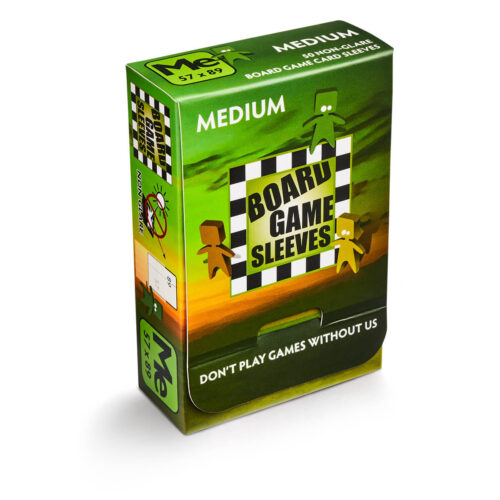 50 non-glare board game card sleeves for cards measuring up to 57 ? 89 mm. This size is typical for large cards in most American board games like ?Munchkin?, ?A Game of Thrones?, ?Ticket to Ride? variants and many more.
 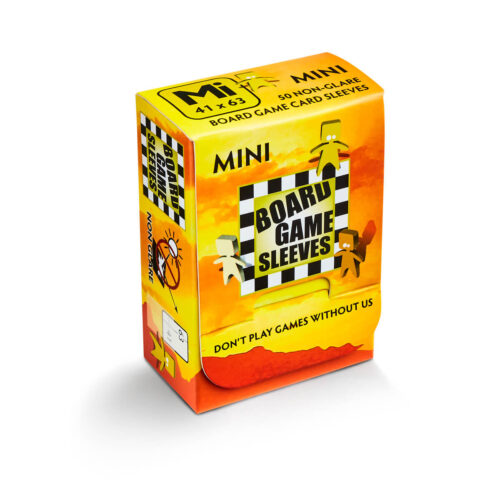 50 non-glare board game card sleeves for cards measuring up to 41 x 63 mm. A size typical for small cards in fine American board games like ?Twillight Imperium?, ?Civilization? and ?Star Wars: X-Wing Miniatures Game?.
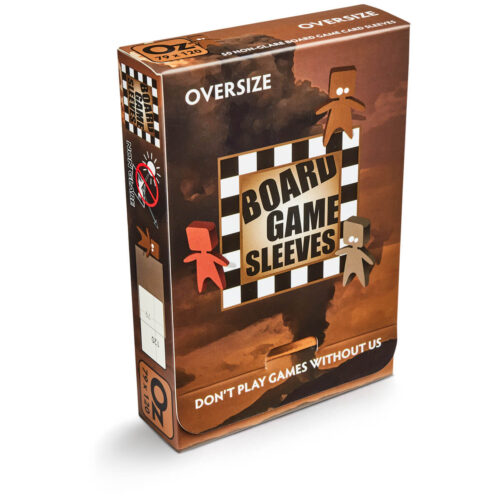 50 non-glare board game card sleeves for cards measuring up to 79 x 120 mm. This card size is mainly used in ?Dixit?, but also found in other games like ?Beasty Bar? and ?Mysterium'.
- Out of Stock
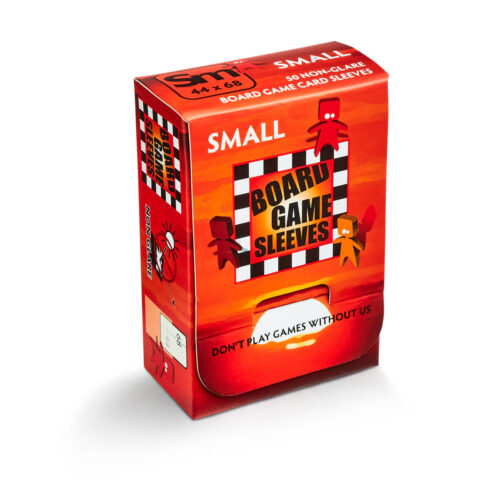 50 non-glare board game card sleeves for cards measuring up to 44 x 68 mm. This size is typical for small cards in most European board games like ?Catan?, ?Camel Up?, ?Dimension? and many more.
 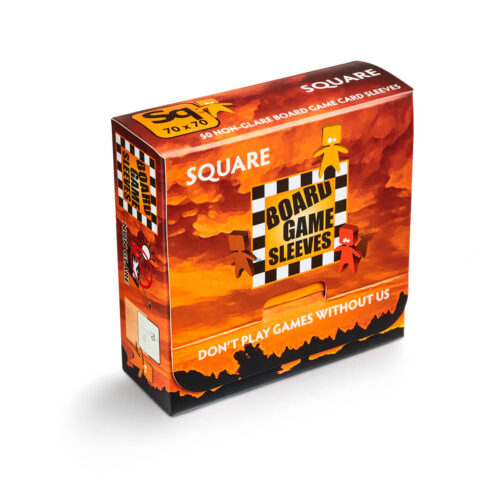 50 non-glare board game card sleeves for cards measuring up to 70 x 70 mm. This card size became popular in the ?Power Grid?/?Funkenschlag? game family, but are also found in many other games like the various ?Catan Card Games? and the ?King of Tokyo? expansions.
- Out of Stock
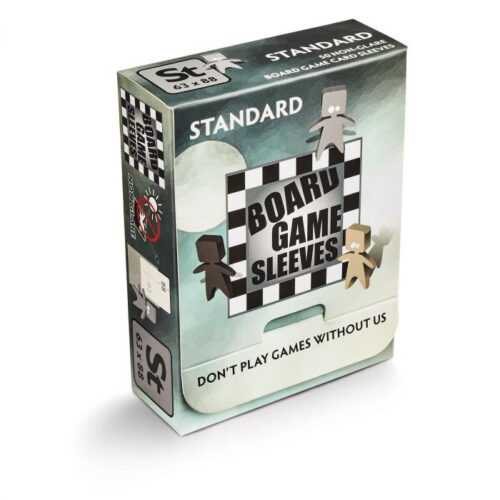 50 non-glare board game card sleeves for cards measuring up to 63 x 88mm (2?? x 3??). This size is typical for trading card games like Magic the Gathering or Pok?mon, and are also found in many newer board games.
 - Out of Stock
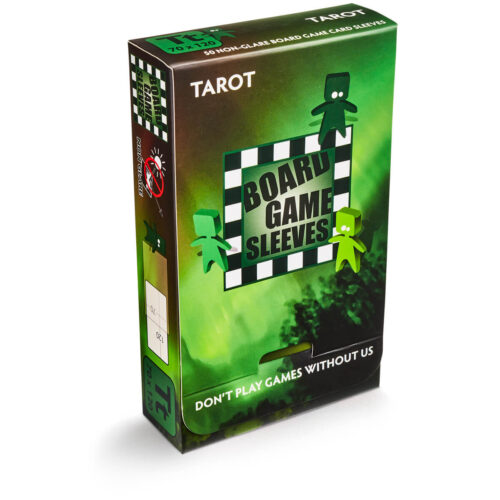 50 non-glare board game card sleeves for cards measuring 70 ? 120 mm. This card size is used in games like ?Elder Sign?, ?Mystic Vale?, ?XCOM?, ?Yedo?, ?Blue Moon? and many more.
 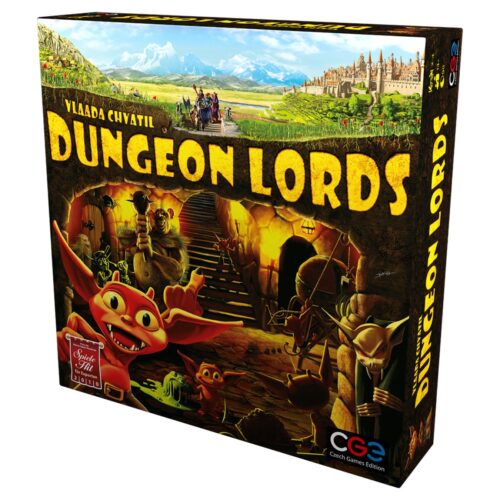 In Dungeon Lords, you are an evil dungeonlord who is trying to build the best dungeon out there. You hire monsters, build rooms, buy traps and defeat the do-gooders who wish to bring you down. Have you ever ventured with party of heroes to conquer dungeons, gain pride, experiences and of course rich treasure? And has it ever occurred to you how hard it actually is to build and manage such underground complex filled with corridors and creatures? No? Well now you can try. Put yourself in role of the master of underground, summon your servants, dig complex of tunnels and rooms, set traps, hire creatures and try to stop filthy heroes from conquering and plundering your precious creation. We can guarantee you will look on dark corners, lairs and their inhabitant from completely different perspective! Each turn, players use a hand of cards to choose where to place their worker. Actions vary from mining gold, hiring monsters, buying traps etc. Each action has three spots available - with each spot having different effects (e.g. mining gold lets you mine more gold in each spot). When using the cards, two cards will become locked and will not be able to be used next turn. There are 4 turns to place actions for each game "year" and two game years in a whole game. Each turn is identified as a "season". Each season, players will get to see the heroes and events to come in the following season. Thus allowing them to prepare. At the end of each season (after the first), heroes will be allocated to each player according to their level of evil. Heroes range from mighty heroes to sneaky thieves. Each hero has their own power for which the player needs to prepare for. Finally, at the end of each year, the heroes will travel down into the dungeon to fight. Scoring in the game is based upon what you have built, the monsters you have hired and the heroes you have captured.