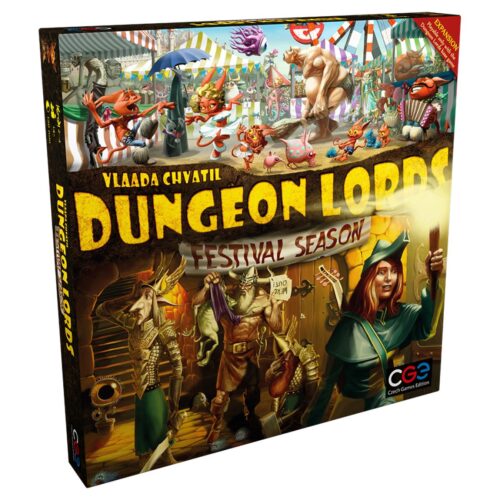
 Dungeon Lords: Festival Season is a big expansion that includes lots of Dungeon Lording goodness. The game is still played over two years, but now each year has five rounds instead of four: winter, spring, summer, autumn and festival season. More time to build your dungeon, but also more time for adventurers to gather a larger party. There are new monsters, rooms, and traps to prepare your dungeon for the battle, but also new nasty spells for the adventurers and sneaky bards who encourage them to perform so-called "heroic" deeds ? not to mention two paladins for each year, now ready to punish up to two evil players. Would you like to push other players toward evil instead of moving yourself toward good when visiting the city? What about making an investment instead of traditional gold digging? Or what about repairing conquered tunnels or rooms instead of digging new ones? Only eight actions are still available to you, but each season one of those actions is replaced by an alternate set of spaces that offer new and intriquing options. And did we mention that it has recently become fashionable for Dungeon Lords to have their own personal pets? Dungeon Lords: Festival Season includes the mini expansion Dungeon Lords: The New Paladins.
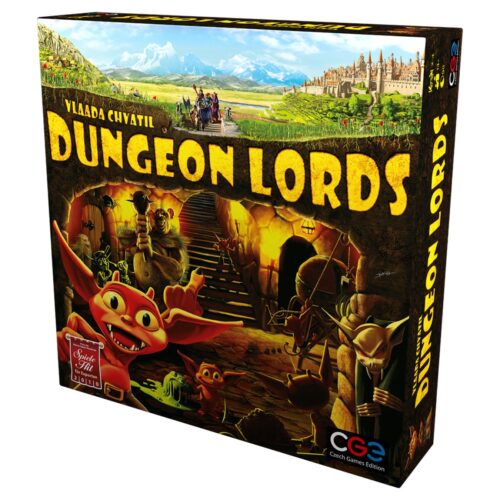 In Dungeon Lords, you are an evil dungeonlord who is trying to build the best dungeon out there. You hire monsters, build rooms, buy traps and defeat the do-gooders who wish to bring you down. Have you ever ventured with party of heroes to conquer dungeons, gain pride, experiences and of course rich treasure? And has it ever occurred to you how hard it actually is to build and manage such underground complex filled with corridors and creatures? No? Well now you can try. Put yourself in role of the master of underground, summon your servants, dig complex of tunnels and rooms, set traps, hire creatures and try to stop filthy heroes from conquering and plundering your precious creation. We can guarantee you will look on dark corners, lairs and their inhabitant from completely different perspective! Each turn, players use a hand of cards to choose where to place their worker. Actions vary from mining gold, hiring monsters, buying traps etc. Each action has three spots available - with each spot having different effects (e.g. mining gold lets you mine more gold in each spot). When using the cards, two cards will become locked and will not be able to be used next turn. There are 4 turns to place actions for each game "year" and two game years in a whole game. Each turn is identified as a "season". Each season, players will get to see the heroes and events to come in the following season. Thus allowing them to prepare. At the end of each season (after the first), heroes will be allocated to each player according to their level of evil. Heroes range from mighty heroes to sneaky thieves. Each hero has their own power for which the player needs to prepare for. Finally, at the end of each year, the heroes will travel down into the dungeon to fight. Scoring in the game is based upon what you have built, the monsters you have hired and the heroes you have captured.
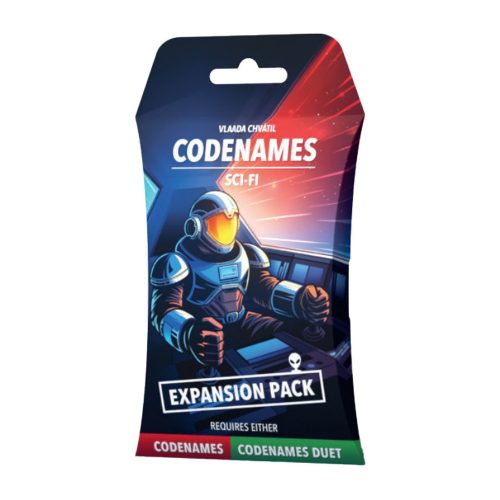 **ETA Early August 2026** In a faraway galaxy, a mad scientist rides a sandworm into an asteroid belt...Codenames: Sci-Fi Expansion Pack features a themed set of 50 words for Codenames or Codenames: Duet. Simply mix the new cards into the base set and venture out into the vast unknown. Codenames Expansion Packs are bite-sized mini expansions that let you customize your Codenames experience with new thematic words or images. A copy of Codenames or Codenames: Duet is required to play this Expansion Pack.Details:• Ages: 10+ Years• Players: 4-8• Game Length: 15 minutesContents:• 50 new words• 3 new agent tiles (2 for Codenames, 1 for Codenames: Duet)• 4 new pictures (for Codenames: Pictures)
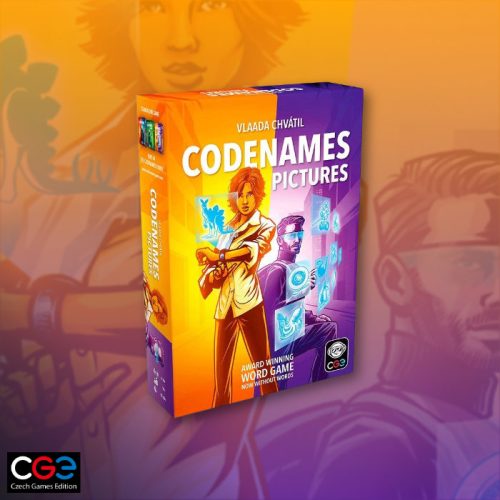 **ETA Early August 2026**Spymasters give one-word clues to help their teammates identify secret agents hidden among mysterious images. Players interpret layered, imaginative pictures instead of words—each one packed with quirky visual elements and multiple meanings. Decode the clues, trust your instincts, and make contact before your rivals do! The updated edition of Codenames: Pictures features refreshed artwork, a revised set of images, a bold new box design, and an insert to keep everything organized. It’s a fresh visual spin on the classic game of deduction, perfect for players who love creative thinking and interpreting subtle visual clues. Whether you're a longtime fan or new to the world of espionage, this version offers a stylish and engaging way to play. What are these mysterious images on the map? They’re visual codes—clues to locations where spies must rendezvous with secret agents! In this newly updated version of Codenames: Pictures, the spy world gets a visual twist, now featuring refreshed artwork, a revised set of images, a bold new box design, and a neat insert that keeps your game organized. Two rival spymasters know the identity of agents hidden across the board. Using one-word clues, they send cryptic messages to guide their operatives to the right image. But beware—a single misstep could lead to an enemy agent… or the deadly assassin. To play Codenames: Pictures, lay out 20 cards, each featuring a quirky image. The spymasters share a key card that shows which pictures correspond to agents from each team, innocent bystanders, and the assassin. They then take turns giving one-word clues followed by a number. The clue should relate to multiple cards that their team should guess, and the number tells teammates how many cards are linked to that clue. Teammates guess one card at a time. If they guess correctly, they can keep going. But if they pick a card belonging to the opposing team or an innocent bystander, their turn ends. And if they choose the assassin? Game over. Play continues with each spymaster offering new clues until one team successfully identifies all of their agents — or someone tragically uncovers the assassin. Unlike the original Codenames, where words led the way, Codenames: Pictures challenges players to decode layered, imaginative images—each one packed with multiple visual elements and hidden meanings. Be clever and trust your instincts. Only one team will make contact with all their agents and win the game! Contents: • 14 agent tiles in two colours. • 1 double agent tile. • 4 innocent bystander tiles. • 1 assassin tile. • 60 key cards. • 1 rulebook. • 1 card stand. • 140 cards with 280 pictures.
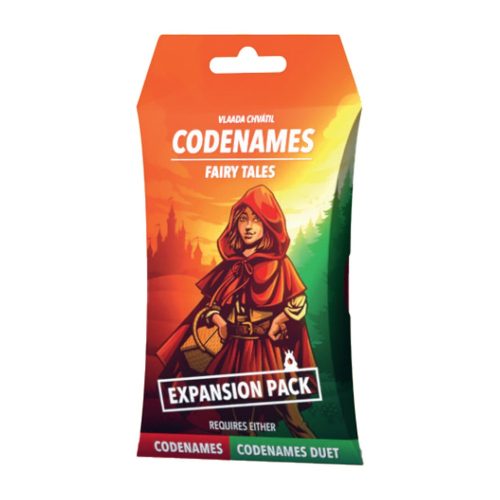 **ETA Early August 2026** Once upon a time, Red Riding Hood and Captain Hook wandered into Oz...Codenames: Fairy Tales Expansion Pack features a thematic set of 50 words for Codenames or Codenames: Duet. Simply mix the new cards into the base set and tell your own fairy tale. Codenames Expansion Packs are bite-sized mini expansions that let you customize your Codenames experience with new thematic words or images. A copy of Codenames or Codenames: Duet is required to play this Expansion Pack.Details:• Ages: 10+ Years• Players: 4-8• Game Length: 15 minutes
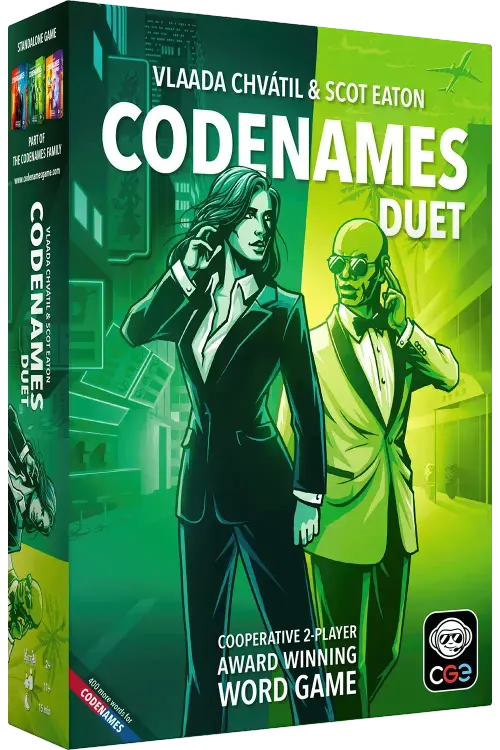 We put a cooperative spin on the classic game! Now with a revised word list, beautiful art, a brand-new insert that keeps your game neatly organized, and a streamlined rulebook that makes it easier to teach and learn the game. /n/nIn Codenames Duet, you're no longer competing — you're teaming up with a fellow operative (or operatives in a group game) for an exciting cooperative experience. The mission? Work together to find all your secret agents hidden among a grid of mysterious codenames. The twist? You each see part of the key — and neither of you has the full picture. Codenames: Duet is perfect to enjoy with only two players, but you can also play it with more friends, if you'd like a less competitive experience than in the basic Codenames. /n/nHere’s how the game works: Lay out 25 word cards in a 5×5 grid. Between you is a shared key card — each half of the team sees one side. On your side, nine words mark your agents, three mark deadly assassins, and the rest are innocent bystanders. /n/nYou’ll take turns giving one-word clues paired with a number, pointing the operative(s) across from you to specific words on the grid. Guess right? Keep going. Guess a bystander? Your turn ends. Guess an assassin? Mission failed — game over. But as long as your guesses are correct, you can keep going, even revisiting past clues. /n/nThe game is played over a series of 9 turns, but can be increased to 11 turns for operatives who may need a little more time as they improve their skills.Your goal: Find all 15 agents — without triggering an assassin — before you run out of time! /n/nThe game includes 400 new words that can be combined with those from standard Codenames.
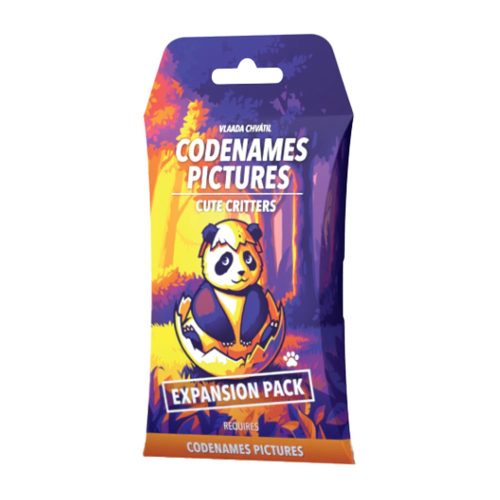 **ETA Early August 2026** Flip through a frog family photo album, tapdance with a tardigrade, or join a bee family dinner! Codenames: Cute Critters Expansion Pack is a playful pack of 40 animal-themed images. Simply mix the new cards into your base game and let these Cute Critters run wild. Codenames Expansion Packs are bite-sized mini expansions that let you customize your Codenames experience with new thematic words or images. A copy of Codenames: Pictures is required to play this Expansion Pack.Details:• Ages: 10+ Years• Players: 4-8• Game Length: 15 minutes• 40 New pictures
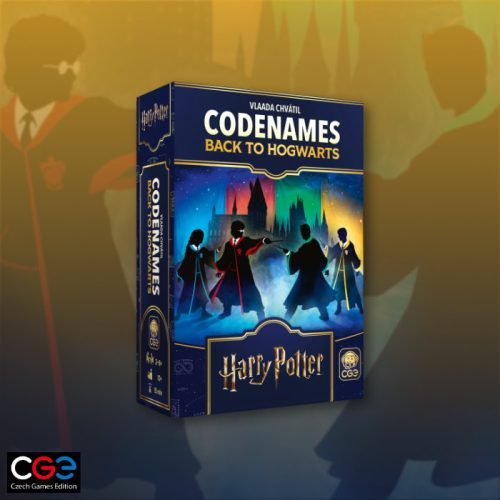 **ETA Early August 2026** Designed for 4–8 players, Codenames: Back to Hogwarts is the first competitive house vs. house Codenames game inspired by the wizarding world. It puts a new twist on the classic Codenames word association game, while offering a new thematic mechanic to change the game for longtime fans and new players alike. As new first-year students at Hogwarts, players will be sorted into two rival houses, each with its own prefect who knows the secrets of the lawful school’s mystery card network.Playing time: 15 - 30 minutesMinimum age: 10 yearsNumber of players: 4 - 8 players
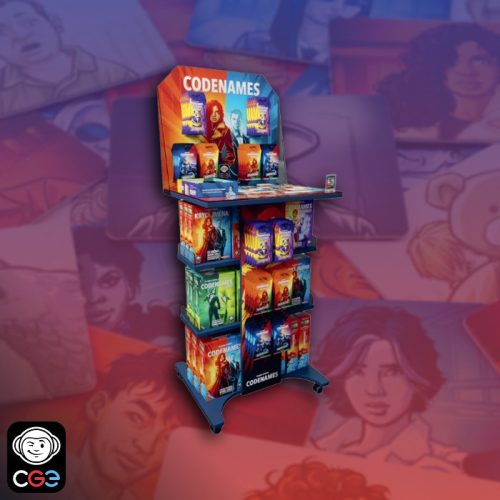 **ETA Early August 2026** Capture attention and drive engagement with a dedicated Codenames Table Display, which allows you to showcase the entire Codenames line in an interactive and eye-catching way.Games:• 12x Codenames• 6x Codenames: Duet• 6x Codenames: Pictures• 5x Codenames XXL• 6x Codenames: Back to HogwartsExpansions:• 24x Codenames: Sci-Fi Expansion Pack• 24x Codenames: Fairy Tales Expansion Pack• 24x Codenames: Cute Critters Expansion Pack
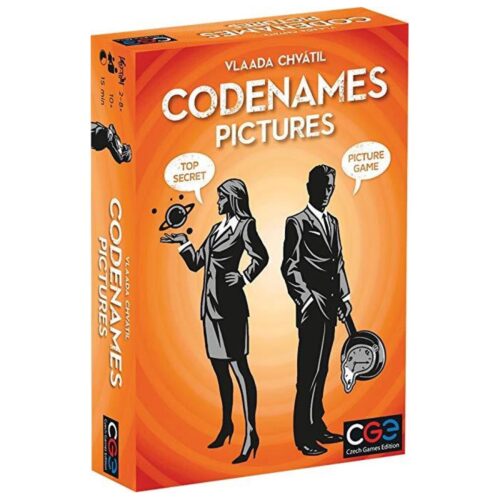 What are these strange symbols on the map? They are code for locations where spies must contact secret agents! Two rival spymasters know the agent in each location. They deliver coded messages telling their field operatives where to go for clandestine meetings. Operatives must be clever. A decoding mistake could lead to an unpleasant encounter with an enemy agent - or worse, with the assassin! Both teams race to contact all their agents, but only one team can win. Codenames: Pictures differs from the original Codenames in that the agents are no longer represented by a single word, but by an image that contains multiple elements.
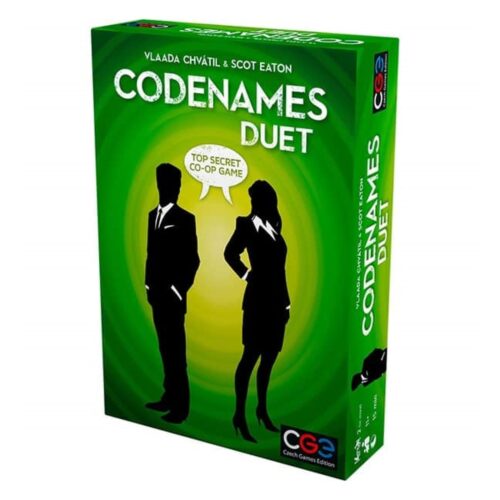 Codenames Duet keeps the basic elements of Codenames Give one-word clues to try to get someone to identify your agents among those on the table! But now you're working together as a team to find all of your agents. (Why you don't already know who your agents are is a question that Congressional investigators will get on your back about later!) To set up play, lay out 25 word cards in a 5x5 grid. Place a key card in the holder so that each player sees one side of the card. Each player sees a 5x5 grid on the card, with nine of the squares colored green (representing your agents) and three squares colored black (representing assassins). Three of the nine squares on each side are also green on the other side, one assassin is black on both sides, one is green on the other side and the other is an innocent bystander on the other side. Collectively, you need to reveal all fifteen agents - without revealing an assassin - before time runs out in order to win the game. Either player can decide to give the first one-word clue to the other player, along with a number. Whoever receives the clue places a finger on a card to identify that agent. If correct, they can attempt to identify another one. If they identify a bystander, then their guessing time ends. If they identify an assassin, you both lose! Unlike regular Codenames, they can keep guessing as long as they keep identifying an agent each time; this is useful for going back to previous clues and finding ones they missed earlier. After the first clue is given, players alternate giving clues.
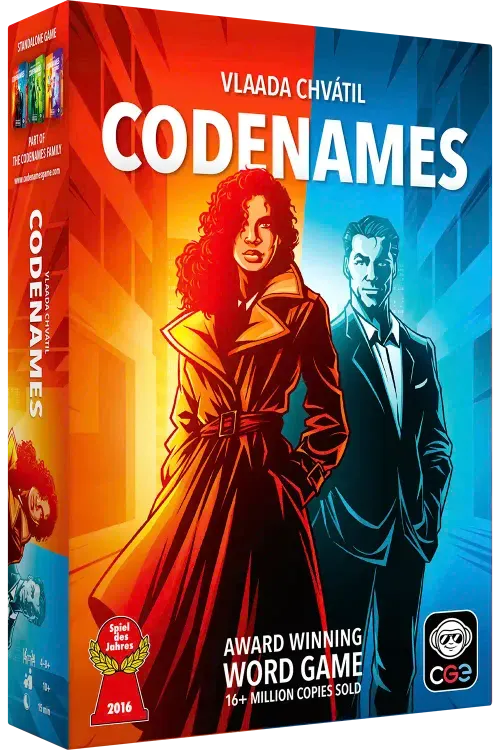 The new edition of Codenames refreshes the classic experience players know and love. From a revised word list for improved gameplay, beautiful art, a brand-new insert that keeps your game neatly organized, to a streamlined rulebook that makes the game easier to teach and learn, this updated version is designed to delight longtime fans of the game and welcome new ones. /n/nIn Codenames, two rival spymasters know the secret identities of 25 agents. Their teammates, however, only know these agents by their codenames — single, seemingly random words like “chocolate,” “sunflower,” or even “carrot.” (Yes, there's an agent out there codenamed "carrot.") The goal is simple: each spymaster wants their team to identify all of their agents first, without accidentally revealing the assassin. /n/nTo play, lay out 25 cards, each featuring a single word. The spymasters share a key card that shows which words correspond to agents from each team, innocent bystanders, and the assassin. They then take turns giving one-word clues followed by a number. The clue should relate to multiple cards that their team should guess, and the number tells teammates how many cards are linked to that clue/n/n.Teammates guess one card at a time. If they guess correctly, they can keep going. But if they pick a card belonging to the opposing team or an innocent bystander, their turn ends. And if they choose the assassin? Game over. /n/nPlay continues with each spymaster offering new clues until one team successfully identifies all of their agents — or someone tragically uncovers the assassin. /n/nGet ready for clever clues, bold guesses, and the ultimate race to uncover your team’s secret agents — Codenames makes every game night unforgettable!
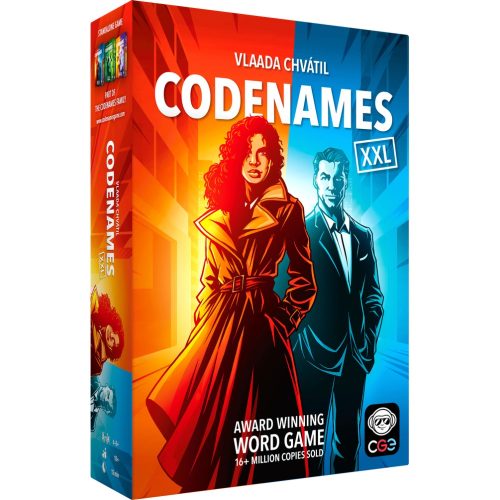 **ETA Early August 2026** Two rival Spymasters know the secret identities of 25 agents. Their teammates know the agents only by their codenames: single-word labels like "disease," "Germany," and "carrot." Yes, carrot. It's a legitimate codename. Each Spymaster wants their team to identify their agents first... without accidentally uncovering the killer. In Codenames, two teams race to see who can contact all of their agents first. Lay out 25 cards, each with a single word on them. The SpyMasters look at a card showing each card's identity, then take turns going to their teammates.Playing time: 15 - 15 minutesMinimum age: 10 yearsNumber of players: 2 - 8 players
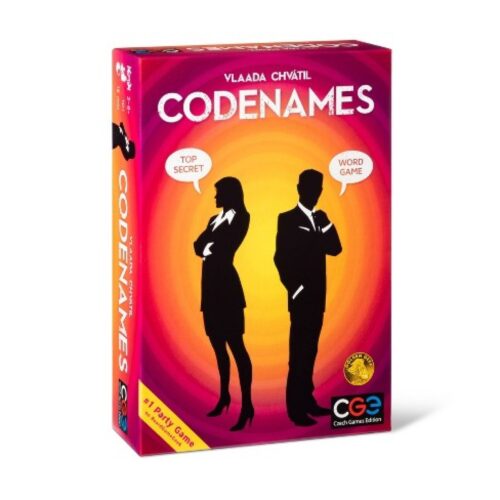 Codenames is an easy party game to solve puzzles. The game is divided into red and blue, each side has a team leader, the team leader's goal is to lead their team to the final victory. At the beginning of the game, there will be 25 cards on the table with different words. Each card has a corresponding position, representing different colors. Only the team leader can see the color of the card. The team leader should prompt according to the words, let his team members find out the cards of their corresponding colors, and find out all the cards of their own colors to win.
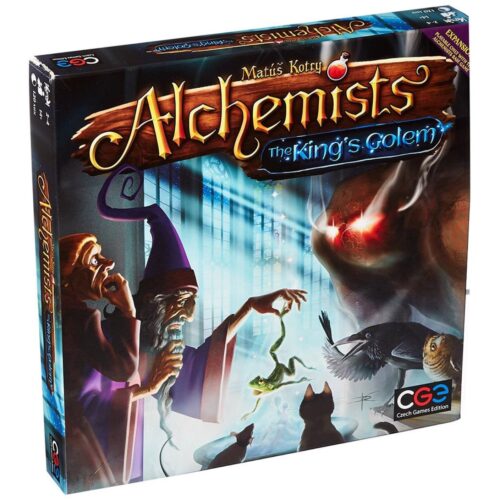 Alchemists: The King's Golem, an expansion to Alchemists, brings you a new logic puzzle with new rewards and consequences. Can you figure out how to animate a golem? And equally important, can you convince the king you are making progress? The expansions are presented in order of complexity. Startup Funding and Busy Days will be just fine for beginners. The Royal Encyclopedia is for players accustomed to the logic puzzle of the base game. The Golem Project is for advanced players who want a new deduction challenge.
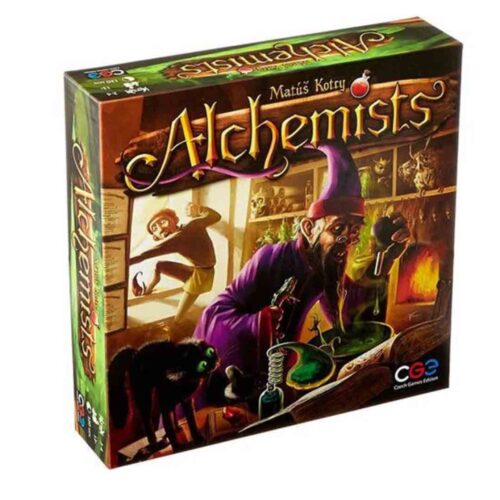 In Alchemists, two to four budding alchemists compete to discover the secrets of their mystical art. Points can be earned in various ways, but most points are earned by publishing theories ? correct theories, that is ? and therein lies the problem. The game is played in six rounds. At the beginning of the round, players choose their play order. Those who choose to play later get more rewards. Players declare all their actions by placing cubes on the various action spaces, then each action space is evaluated in order. Players gain knowledge by mixing ingredients and testing the results using a smartphone app (iOS, Android, and also Windows) that randomizes the rules of alchemy for each new game. And if the alchemists are longing for something even more special, they can always buy magical artifacts to get an extra push. There are 9 of them (different for each game) and they are not only very powerful, but also very expensive. But money means nothing, when there's academic pride at stake! And the possession of these artifacts will definitely earn you some reputation too. Players can also earn money by selling potions of questionable quality to adventurers, but money is just a means to an end. The alchemists don't want riches, after all. They want respect, and respect usually comes from publishing theories. During play, players' reputations will go up and down. After six rounds and a final exhibition, reputation will be converted into points. Points will also be scored for artifacts and grants. Then the secrets of alchemy are revealed and players score points or lose points based on whether their theories were correct. Whoever has the most points at the end of the game wins.
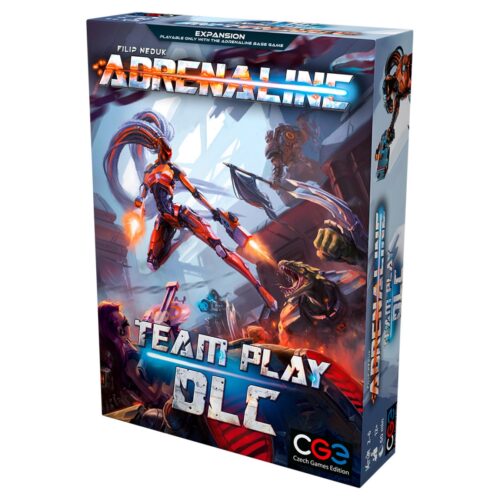 The Adrenaline: Team Play DLC expansion allows you to add a sixth player to the Adrenaline Deathmatch mayhem. It introduces character-specific weapons and abilities bringing new effects and experiences to the game. Take full advantage of your actions with the unique Adrenaline Rush system and boost your epic shot. Streamlined gameplay allows you to focus on what Adrenaline is really about: quickly grabbing ammo and start shooting. Winning conditions are set at the beginning of each game for a bigger variety of how to play and win! A new team mode introduced in this DLC requires effective communication with your team, to combine your abilities, use the position of your opponents to your advantage, and enjoy creating sophisticated strikes!
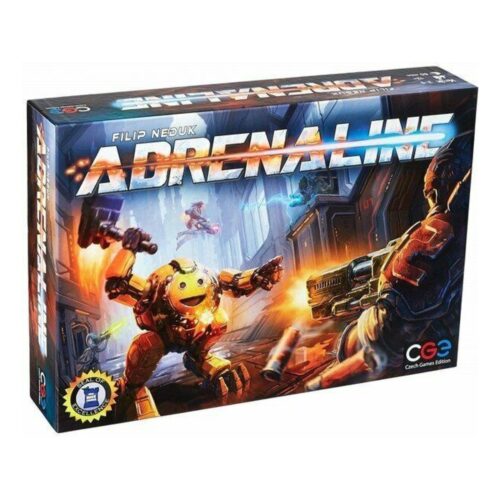 In the future, war has left the world in complete destruction and split the people into factions. The factions have decided to stop the endless war and settle their dispute in the arena. A new virtual bloodsport was created. The Adrenaline tournament. Every faction has a champion, every champion has a chance to fight and the chance to win. Will you take the chance of becoming the next champion of the Adrenaline tournament? Play a first-person shooter on your gaming table. Grab some ammo, grab a gun, and start shooting. Build up an arsenal for a killer turn. Combat resolution is quick and diceless. And if you get shot, you get faster!